.
NO PLACE FOR MAN
NO PLACE FOR MAN
Documenting Greenpeace's campaign to protect the Barents Sea from Arctic oil exploration.
Commissioned aboard Greenpeace icebreaker Arctic Sunrise, 2016.

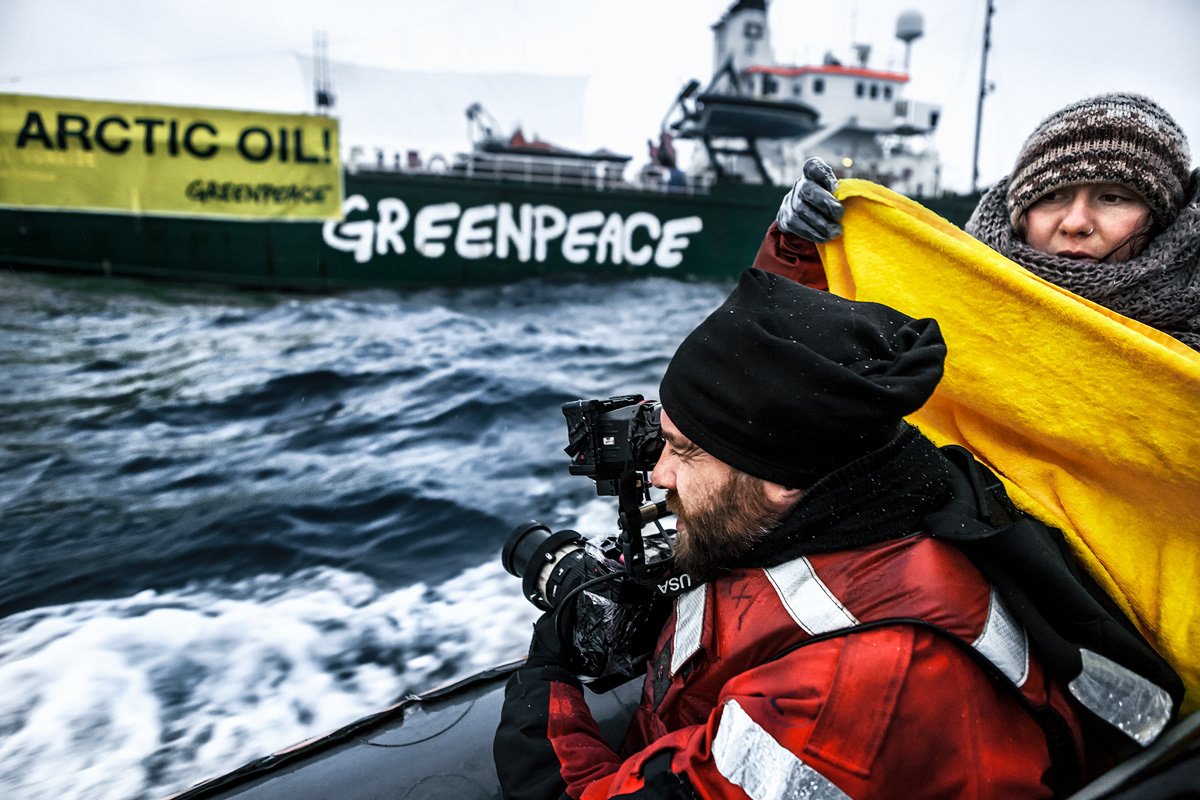
In March 2016, the Greenpeace icebreaker Arctic Sunrise sailed into the Barents Sea to confront Austrian oil company OMV, which had begun exploratory drilling at the Wisting Central field in the middle of Arctic winter, with as little as four hours of daylight and temperatures far below freezing. The semi-submersible rig Transocean Spitsbergen was operating 300 kilometres north of Hammerfest and just 180 kilometres from the Bjørnøya nature reserve. Activists from Austria, Germany, Hungary, and Norway deployed in RHIBs and kayaks, holding banners reading "No Arctic Oil" while an LED display on the ship's deck spelled out "Stopp OMV!" The campaign was aimed at an Austrian public largely unaware of where their national oil company was drilling, and what it was putting at risk.




Just 180 kilometres from the drill site lies Bjørnøya — Bear Island — a protected nature reserve and the southernmost island of the Svalbard archipelago. Uninhabited except for a nine-person Norwegian weather station, the island hosts one of the largest seabird breeding colonies in the northern hemisphere. Over a million birds — fulmars, guillemots, kittiwakes, little auks, return to its southern cliffs each year to nest. The island was declared a nature reserve in 2002. An oil spill in these waters, in a climate where snow covers the ground for most of the year, would be nearly impossible to clean up. Despite its name, Bjørnøya has not recorded a polar bear sighting in years. The pack ice that once carried them south from Svalbard no longer reaches this far.


